I like whale sharks. I didn’t always though. When I was a child it was all about hammer heads and great whites. I guess you have to grow into whale sharks just as one grows into coffee and dark chocolate, basically anything bitter (definitely get more bitter with age). I think you probably have to be a little older to appreciate the slow things in life such as whale sharks. A creature that grows up slowly, moves slowly, eats with minimal effort and at least from a human perspective seems to have a nice easy peaceful time. Yup sometimes I think I wouldn’t mind the life of a whale shark. Then again if I was a whale shark (or any kind of shark for that matter) I wouldn’t get to enjoy IEMs like the TRN Whale Shark. So enough daydreaming about sharks let’s get to it. Let’s get into the Bartenders ‘TRN Whale Shark Review’.
TRN Whale Sharks Review – The Cocktail:
Sharks are not simple creatures. We talk about them as living fossils and this often supports a narrative that they must in some way be lesser evolved. Sharks are not lesser evolved they just established lots of their characteristics and features very early on and never really needed to change them.
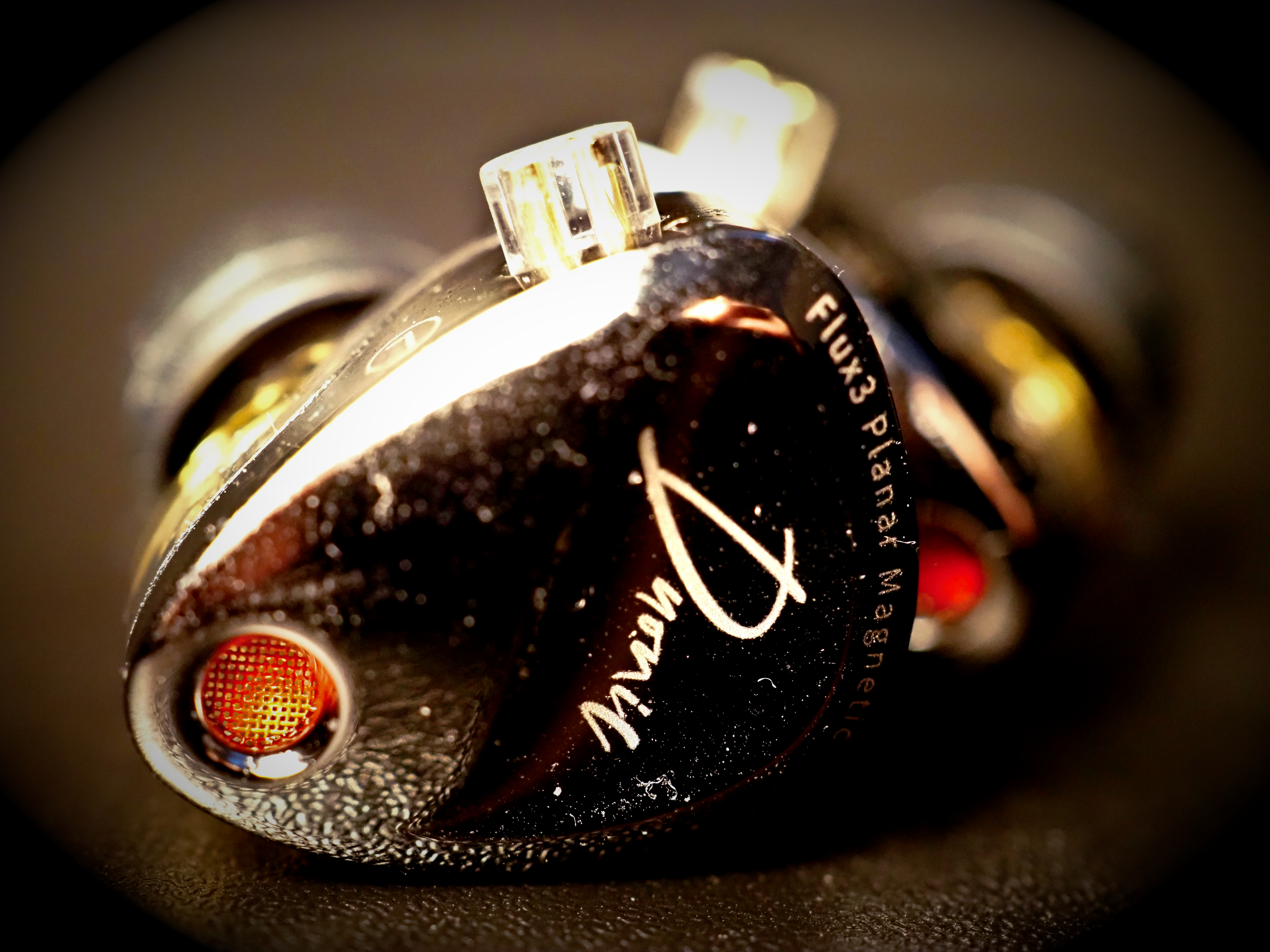
That said the TRN Whale Shark is a product of rapid evolution as this IEM is a direction successor to the TRN Shell and evolving from a shell to a shark is not easy (also not how evolution works). I have not reviewed and have never listened to the TRN Shell but looking at its driver configuration it is clear that this IEM is an ancestor on the same branch of the family tree. Like the TRN Shell the TRN Whale Shark makes use of three dynamic drivers and a micro planar. The three dynamic drivers are all different not only in their size but also in their materials. This is one complex organism.
Whilst the driver configuration of the Whale Shark has changed very little from the Shell the price has experienced the common evolutionary trend toward gigantism (Cope’s Law). The Shell used to be available for around £60 and can often be found cheaper. I paid £81 for the Whale Shark but this was a good deal and they are often retailing for around £110. A price increase of £50 for what may be described as version 2 of an IEM is a lot but hey sharks are expensive (I guess. Never really checked. Can you even buy a shark?).
With a high sensitivity and low impedance the TRN Whale Shark has no problem getting loud. That said I a decent DAC/AMP is still recommended and is definitely necessary to get the most out of the bass and most sparkle out of the treble.
- Drivers: 1×10.5mm Beryllium-Coated Composite Diaphragm Dynamic Driver, 1x8mm PET Diaphragm Dynamic Driver, 1x6mm Titanium-Coated Diaphragm Dynamic Driver, 1x6mm Planar Magnetic Driver
- Frequency: 10 to 40,000 Hz
- Impedence: 16 Ω
- Sensitivity: 110 dB/mW
TRN Whale Sharks Review – The Taste Test Setup:
Just as sharks have survived since before the first trees my taste test setup has endured never changing with the passing of time.
As is so often the case in my reviews this section becomes all about eartips and this time is no different. The TRN Whale Shark comes with a good selection of eartips (more on that later) and I did try the sticky liquid silicon ones as I had not used these before. I was however disappointed. I couldn’t get a good seal and lost all the bass and so I returned to the Spinfit W1s.
Oh and I almost forgot. Tuning nozzles. Have to talk about tuning nozzles. The TRN Whale Shark comes with three pairs of tuning nozzles and this review has been conducted using the black nozzles.
- DAC/AMP: SMLS M20
- Cable: 4.4 mm Tripowin C-01
- Eartips: Spinfit W1
TRN Whale Sharks Review – The Non-Audio:
The TRN Whale Shark is quite a package. It is quite a step up in price from many of the other IEMs I have reviewed but even compared to its peers this is a lot of stuff. There is a hard carry case, a modular cable (3.5mm and 4.4mm), 3 sets of tuning nozzles and 15 pairs of eartips including TRN T-tips, liquid silicon tips and memory foam tips.
Between the eartips and the nozzles there is a lot of room to change the sound of the Whale Shark. I certainly did not try all the combinations. I didn’t even use the red tuning nozzles. As I mentioned I did try the liquid silicon eartips but they didn’t work for me. I am sure the TRN T-tips would have worked. I don’t like foam tips. And all the other tips looked pretty uninteresting. As for nozzles. Well I started with the green nozzles. Switched to the black as I wanted a little more treble presence and never went back. The red nozzles are supposed to be more relaxed than the green so to me there didn’t seem much point in try them. And there you have it. That’s how I ended up with the TRN Whale Shark ready for me to review.
Moving on from the accessories we come to the build. The TRN Whale Shark are an all metal build and a very interesting build. I am not going to say much here as I think a lot of what I want to say is more about style than build. So sticking only with build. These feel tough. Sharklike. They could defiantly survive in the dog eat dog world of the park or the shark eat shark world of the seas. Of course because they are metal they are a little heavy (not yet time to talk about comfort) and this does mean that when they knock things they hit hard. So in way you have to be just as careful as you would be with more delicate resin IEMs. That said they should survive well.
Next up comfort. The TRN Whale Shark are not the most comfortable IEMs. They are a fairly large size as is expected for the largest fish but you know what they say, ‘there is always a bigger fish’ and there are certainly bigger IEMs out there (but there isn’t a fish bigger than a whale shark so I guess this expression doesn’t really work). The Whale Shark also have a pretty rounded shape that fits well into the curvature of the ear or at least of my ears. So the size and shape is not bad however the weight is a problem. These are heavy IEMs this means that eartip selection from a comfort perspective is key and even then long listening sessions can be a little uncomfortable.
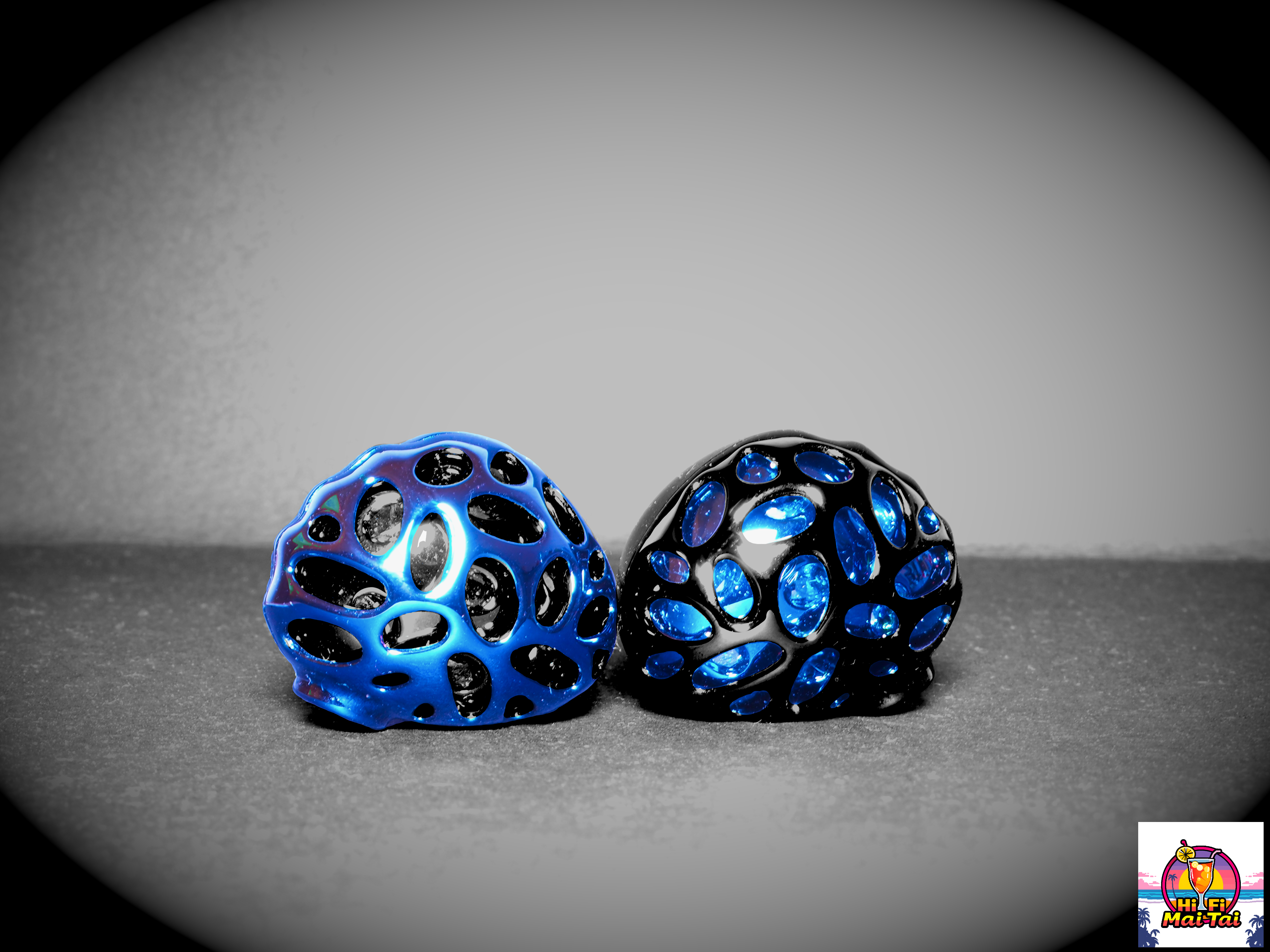
A finally style. Whale Sharks definitely have style. They have unique patterns. They even glow in the dark (well sort of. Okay not really.) The TRN Whale Shark is as stylish and the animal from which it derives its name. The 3D aspect of the design where the outer mesh structure encases the inner jeweled structure is very unique. I don’t know of any other IEM that does that. This IEM is a real fashion statement and I love it. Just look at it.

TRN Whale Sharks Review – The Audio:
Lets mix things up and start with the technicals this time around. The TRN Whale Shark is a big ‘holographic sound’. It’s a sound that feels like its filling a very large space. Its expansive but also dense. Its really like there is a lot of sound. Not that there is a lot of volume but there is a lot of sound a whole ocean of sound. Within this ocean of sound there are lots of other sounds and the TRN Whale Shark does a very good job of picking them out. Instruments all sound distinct and separated from one another in space in all of width, height and depth.
Details are also impressive. In the treble and mids everything sounds crisp and sharp bringing forward those small sounds that help the music feel livelier and more energetic. In the bass there is texture and body with impacts and decays sounding detailed.
The bass itself reaches deep and it rumbles. There is good impact but it’s the depth and sub-bass that is perhaps most impressive. This bass underpins everything and provides a solid foundation for the sound never really overpowering the mids. It is not the fastest bass sound it doesn’t have that bounce or elasticity that often characterizes fast basses but as a result it is more textured and more shaped.
The mids prioritize clarity. There is some warmth here so they don’t sound thin. But the mids certainly aren’t thick and weighty. I really like this balance. The mids have room to breath and let their own detail shine without sounding clinical or heavy. This mid balance carries through to the vocals which are positioned maybe a little forward but never shouty. With a little warmth and a little brightness both male and female vocals sound clear with sufficient sharpness and a nice thickness. This balance also means that male and female vocals are produced equally well.
And finally, the treble. As mentioned previously I used the black nozzles to give the treble a little boost. For some people the green nozzles equipped right out the box are probably enough treble. But I wanted more. Just a little more. On lots of tracks I don’t think I could tell the difference in the nozzles but every now and again something would sparkle and shimmer just a bit more with the black nozzles. For me there really was no benefit to the green nozzle and on the right track there was a benefit to the black. With the black nozzle there is a brightness and plenty of air. The micro planar is doing its thing and it is doing it well.

Geekwold GK12 Ultra Review – The AI Opinion:
This a new feature that I am trying out. How well will it work? I don’t know but here goes anyway.
In this section I have asked Google’s AI mode to predict a score for the to be reviewed IEM prior to publishing my review. To get this prediction I have asked that it predict a score based upon the scoring system employed by me here at the HiFi Mai Tai beach bar. That’s it. It is as simple as that. I could be doing myself out of the job here. But got to embrace the modern world etc. And if AI is gonna take my job I am going to go down fighting. Hopefully it proves itself rubbish and there is nothing to worry about.
So the TRN Whale Shark. What does AI think?

This is probably one of the closes opinions AI and myself have ever had. It almost like we are the same person. Ew should not have said that. Sounds gross. Anyway we agree within 5% on everything and we even agree on what is best about this IEM with AI rating the technical, bass and details and its strongest elements an opinion I very much share.
The bass is a pretty interesting one. AI would have this as the best bass of any IEM reviewed at the HiFi Mai Tai Beach Bar. I do not agree with this though I do think this is a great bass IEM. I think for me I appreciate the speed and elasticity of the BGVP Feather more than I appreciate the deep depths of the TRN Whale Shark and this is reflected here in my scoring. AI on the other hand clearly likes big rumble. Maybe AI is a secret Bass-Head.
TRN Whale Sharks Review – Comparisons
Lets start with an odd one. The KZ Duonic. Lets consider this a bonus comparison. Like the TRN Whale Shark the KZ Duonic are a dynamic driver and planar hybrid in this case just a single DD rather than the three of the Whale Shark. When comparing I was struck very quickly by two things. The first was that the KZ Duonic are much harder to drive and required a little more volume. The second was that technicals of the Whale Shark are worth in the increase in price alone. The sound stage of the Duonic is not bad and has good width but it doesn’t have the height and depth of the Whale Shark and it can’t match the Whale Sharks imaging. Further to this the mids of the Duonic are much more recessed and vocals are softer and more muffled. Its not really a surprise but I would take the Whale Shark that said the Duonic can give a small taste of that Dynamic Diver Planar hybrid sound for a fraction of the cost.
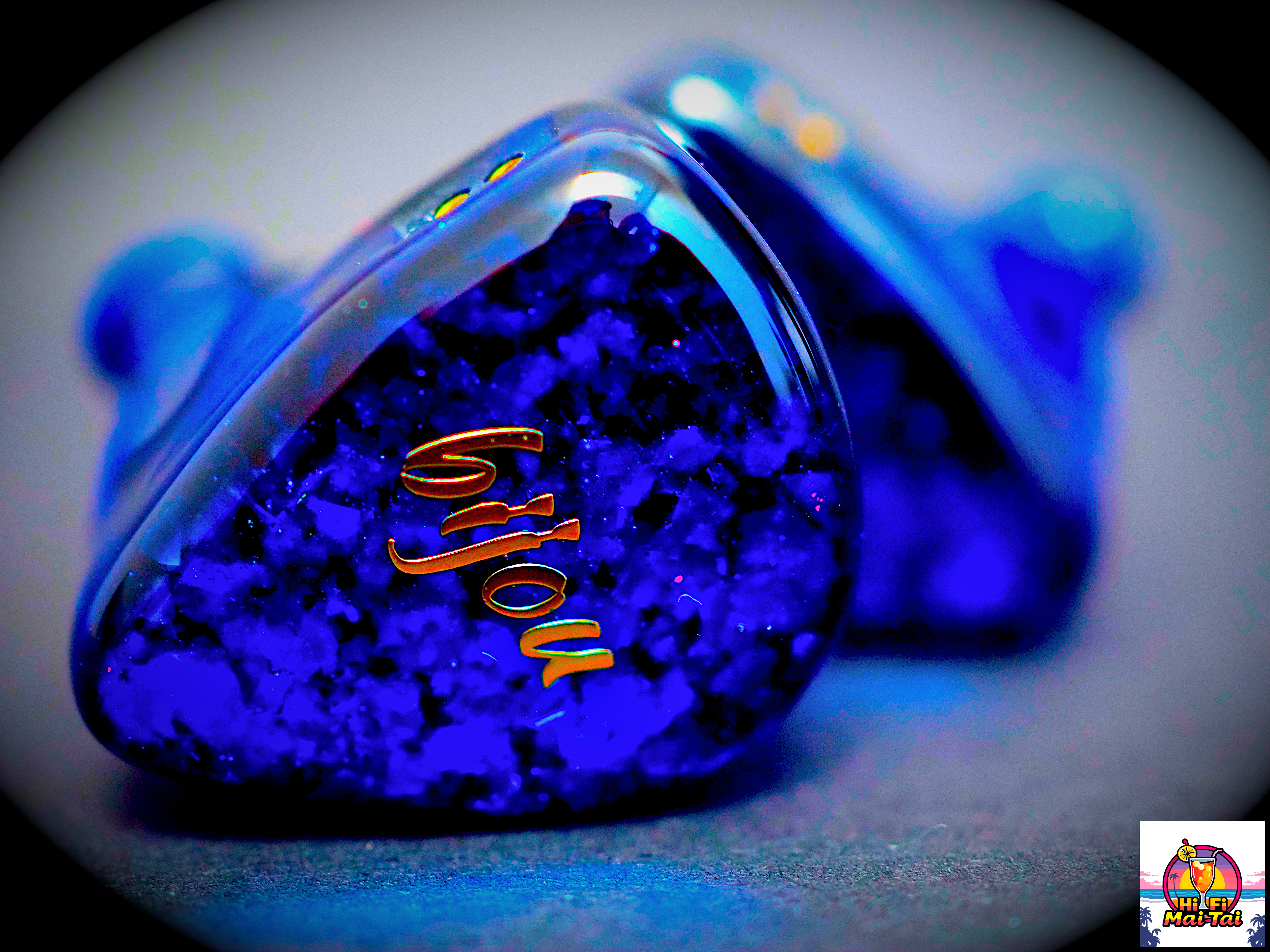
Okay on to more serious comparisons. The QoA Bijou. Perhaps the only IEMs more blue than the Whale Shark. The Bijou are a much closer match to the Whale Shark when it comes to technical performance. Both these IEMs are big sounding stages with plenty of room and they both fill that space really well. They both do a good job of isolating the instruments and recreating locations within the sound for each. The treble of the Whale Shark is much more present and a lot crisper and more energetic. Vocals on the Bijou are also little softer and lack a little of the TRN Whale Sharks sharpness. The mids of the Whale Shark are also more detailed and a little further forward. For sound alone I would take the Whale Shark but the Bijou are far more comfortable and so much more suitable for longer listening.
Next up the Geekwold GK12 Ultra. Like the Bijou these have excellent technical performance perhaps not quite a watch for the Whale Shark and Bijou but still very impressive. The treble is much more restrained and less energetic than the Whale Shark. Its a little relaxed for me. The bass of the GK12 Ultra is really booming its got much more of a bounce than the Whale Shark but it can overpower the mids a bit which are also a little more recessed than the Whale Shark. Perhaps because of the relaxed treble the vocals of the GK12 Ultra are a little soft more so than the Bijou. Over all its the Whale Shark again for me but yet again it is important to note that the GK12 Ultra are more comfortable and better for longer listening sessions. They are also much cheaper.
Now for the Kinera Celest Phoenix Call. For the tracks I used in this comparison these were excellent. I didn’t hear any of that wonky tuning in the upper mids/lower treble but I know its there. The Phoenix Call can’t match the size of the Whale Shark’s sound but its technical performance is just as impressive only in a different way. Its a dense less spacious sound that still provides a good sense of being at the center of the sound and having instruments all around you in distinct precise locations. There is perhaps a little more detail or at least a little more noticeable detail in the Phoenix Call and the bass has much more of a mid bass hit at the cost of a little depth. And though the long large nozzles of the Phoenix Call are likely to be uncomfortable for some, for me they are perfectly comfortable. And to top it all off the Phoenix Call are a good looking pair of IEMs. In their own way they are as unique as the Whale Shark. So which is the one for me? I think again it is the Whale Shark its close on the right song but as soon as a track hits that upper mid/lower treble region where the strange tonality comes through it becomes an easy choice and is definitely the Whale Shark.
And finally we come to the fifth IEM of this comparison. I guess its a double bonus this time out. We have te BGVP Feather. The BGVP feather is definitely more detailed and perhaps a little more energetic than the Whale Shark. The bass of the Feather has more impact but maybe less texture though it still has good shape and definitely doesn’t sound like someone banging on a microwave. The bass and the treble of the Feather sound faster but the mids don’t quite have the clarity of Whale Shark. The technicals of the Feather are very good but the Whale Shark is even better. For acoustic tracks the Feather seems to jump to another level but for everything else these IEMs are close competitors. The more spacious and forward mids of the Whale Shark will make it very compelling IEM to many. Myself included. There isn’t a lot in it even though they are quite different IEMs but perhaps I prefer the sound of the Whale Shark. That said the BGVP Feather are likely to remain my go to IEMs as they are more comfortable and comfort accounts for a lot.
TRN Whale Sharks Review – Overall:
I feel like this has been a very long review. Five comparison will defiantly do that. So I guess I should this section short and sweet.
So to wrap up. The TRN Whale Shark are something different from other sub £100 IEMs. That have a style that is all their own and a sound that is wonderfully immersive packed with detail, energy and space. This great sound does come at a cost though. With a fully metal construction and a complex driver arrangement this IEM is big and it is heavy. Perhaps for everyday use there are other better options. If buying with your head something lighter would probably make more sense. But if buying with your ears there isn’t a lot in the price range like this. And of course whale sharks are cool and that makes these cool.

Score: 84.78 %
Take Your Clothes Off Tequila