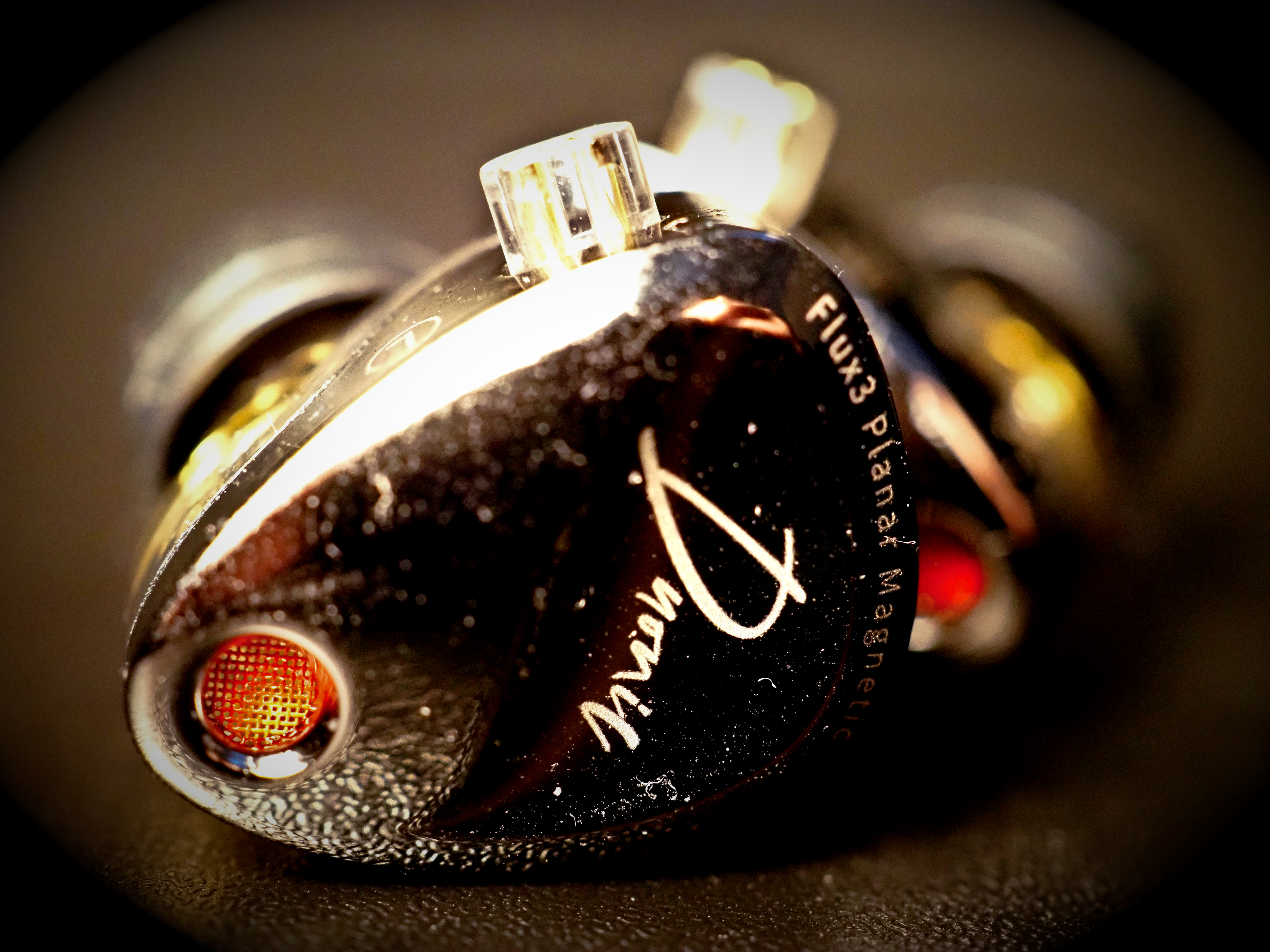
This week I wasn’t able to find the time to review a new cocktail. Life got in the way. Too much to do and far too little time. Whilst having nothing new to talk about is certainly a disappointment it does at least give me the opportunity to talk about some of the IEMs that have made their way to the HiFi Mai Tai Beacch Bar and in particular those cocktails that have surprised (both good and bad). So lets get to it. Lets have a look back at the Beach’s Best Cocktails.
The Beach’s Best Cocktails: The Overall Score Graph
 Firstly, I’m going to take the time to explain the score graphs used here at the HiFi Mai Tai Beach Bar. If you are familiar with these then feel free to skip on. But if not hopefully this will clear up any confusion. I appreciate that these may not be completely intuitive. I am also going to explain this from the perspective of the final overall score. All other scores are the individual considerations prior to weighting and averaging (except the sound overall which is the equally weighted average of all audio elements).
Every considered element (Bass, Mids, Treble, Vocals, Details, Techncials, Build, Comfort, Accessories and Style) are rated as a percentage out of 100% (as is pretty normal). However, these ratings are not equal and some considerations impact the score more than others. All audio considerations (Bass, Mids, Treble, Vocals, Details and Technicals) are weighted equally to each other and are collectively weighted such that they are twice as impactful on the final score than the non-audio considerations. The non-audio scores are not weight equally with comfort weighted to have the biggest impact, build second, style third and accessories last.
To summarize the audio is twice as important as the non-audio. All audio elements are equally as important as each other and comfort is the most important non-audio aspect. The overall score considers all these ratings and numbers to come up with one single number as a percentage with 100% being perfect. With me so far?
Continuing on. This single overall score then determines the vertical position on the graph (the y-axis). The horizontal position (the x-axis) is determined by the price. Therefore, the higher an IEM on the graph the better its performance and the further left on the graph the cheaper it is. This means that IEMs in the top left are best performance for the lowest price (Best value) and IEMs bottom right are the worst performance for the greatest cost (Worst Value).
Okay that’s all good but what about the line? Well I am glad you asked. The line is a best fit through the data points (each recorded IEM). It represents where the ‘average’ of the data would be (actually this is an over simplification but it will do). Therefore, any IEM on the line performs exactly as would be expected for the price. An IEM above the line out performs its price and an IEM below the line underperforms its price. It is important to note that the line is dynamic. It is determined by the data points so as more IEMs are added the position of the line will change and in doing so it will illustrate the performance value of all plotted IEMs.
Well the line sounds perfect. Very clever. I get it now. Okay so when do we get to talk about some of the IEMs? Hang on a minute. There is a major problem with this approach. The line is straight but price performance isn’t a linear relationship. I don’t think its controversial to state that doubling the price does not double the performance. I think intuitively it is clear that some IEMs are almost as good as IEMs that cost significantly more and that as you go up in price the improvement in performance diminishes. This relationship between price and performance would therefore be better represented by a curved line (a logarithm line perhaps). However, I didn’t want things to get too complicated and to date I have covered only a small section of the potential price range and therefore a linear approximation has been a reasonable representation.
The ‘data’ driven approach to presenting this information does enable several statistical assessments and I will touch on a few of these as and when they come up but I think I will leave this lecture here for now. Don’t worry there is no homework for this one. I hope I haven’t chased you away from the HiFi Mai Tai Beach Bar. We are all about kicking back and relaxing but sometimes it can be hard to escape the maths.
All of the graphs for individual IEMs are available at the cocktail menu. I am aware there may have been issue with these graphs not displaying but have no fear I shall soon fix them.
The Beach’s Best Cocktails: The KZ ZA12
Right in the middle of the overall score graph sits the KZ ZA12. At this time it sits on the line suggesting that it is perfectly priced. Every £ delivers exactly the right % of performance. I was a little surprised that the graph has taken this shape until I thought it about. There are two reasons why this IEM is where it is. One reason a sound/audio explanation. The other a statistical explanation. Which would you like first? For some this may be like asking if you want the good news or the bad news. Its bad news first right? I am going to do the bad news.
Currently, the reviewed IEMs have mostly been under £35 with two over £75 (the BGVP Feather and Kinera Celest Phoenix Call) and only the KZ ZA12 between £35 and £75. This means that each of these three IEMs have a greater impact on the position of the line than the other IEMs in the sub £30 budgets. Hence, it is expected that these would all be closer to the line and indeed they are. So that the mathematical reason.
The audio reason is that the KZ KZA12 is the first IEM I reviewed and the oldest IEM in my current collection (nothing older has survived). Therefore, though it was never really my intention the KZ ZA12 has likely been a bit of benchmark and a good benchmark would sit perfectly on the price/performance line.
Does any of this mean the KZ ZA12 is good? Well it means the KZ ZA12 is in my opinion as good as it should be and if you can get it for less than £50 you will have got a good deal. But this doesn’t actually say anything about the sound and the tuning. For that information I would recommend reading my full review but I will do a very quick summary here. The KZ ZA12 is a bright, detail focused IEM with treble tuning likely to sharp for some and a bass that is clean and fast but will lack body and weight for others. That’s it for here. Read the full review for more including comparisons.
The Beach’s Best Cocktails: The KZ Duonic
Another IEM that stands out on the graph is the KZ Duonic. This IEM is positioned significantly higher on the graph than the cost performance line and yeah you got it that means it is excellent value for money. Overall it actually has a performance score higher than the KZ ZA12 and costs a fraction of the price. The Duonic is positioned approximately 13% higher on the performance score than is predicted by the line. And this equates to a value score of 120% (I will probably have to explain these at some point but so far I haven’t actually used this metric for anything). The KZ Duonic out performs is price by significantly more than any of the other reviewed IEMs with the BGVP scale some way off in second closely followed by the TRN Dolphin in third.
I have avoided referring to ‘deviations’. The spread in the data can be statistically accounted for by considering deviations and this is the mathematical principle that has been applied here to conclude that the KZ Duonic is the best value. I may have ago at explaining this maths in the future but this is a beach bar not a school so I thought I would leave something until at least after lunch.
Okay but seriously is the KZ Duonic any good? Well the KZ Duonic is the third highest rated IEM that has been reviewed when considering the overall scores so the simple answer is yes. Yes the KZ Duonic are good. But (and there is always a but) this comes with the same caveat as when addressing the KZ ZA12. This score does not directly show the tuning and therefore to assess if the KZ Duonic is for you you should read the review. Again I will do a quick summary here. The KZ Duonic is fast, heavy hitting, clean bass with a sparkly detailed treble and impressive clarity across the mids. More including comparisons can be found in the original review.
The Beach’s Best Cocktails: The BGVP Feather
Finally, we can talk about an IEM not made by KZ. Currently, the BGVP Feather is in my opinion the best IEM that I have reviewed and this is reflected by it having the highest score. When considering the IEM as a whole (the overall score) it doesn’t outperform the Kinera Celest Phoenix Call by much however, I got it a little cheaper than the Phoenix Call and therefore it sits on the value side of the cost-performance line. However, as I mentioned for the KZ ZA12 the fact that these are the only data points around this price pretty much forces the line to go between them thus one of them was always going to lose.
Therefore, currently when looking at £50 plus the cost-performance line is a limited indicator but this will improve as more IEMs are added. This limitation does not detract from the fact that I really enjoyed the BGVP Feather. This IEM is a v-shaped tuning done really well. Its all energy without being fatiguing (at least for me). Again make sure to check out the full review for the details.
The Beach’s Best Cocktails: Just One More Drink
I hope this explained some of the philosophy behind the graphs generally and the Overall Score graph in particular. Now go get yourself a drink (you’ve earnt it) and I will be back with a normal review next week (or will I be back with the monthly wrap up? Who has a calendar?). Anyway. No graphs. No maths. Just sound. Just IEMs. Just Cocktails.